

INTRODUCTION
Hey land lovers!
For this week’s idea we're looking at the growing opportunity in RV and boat storage. The potential for great returns with minimal development costs makes this one of the simplest approaches with the lowest barriers to entry.
For those of you ready to put this idea to work, we’re excited to introduce our new Action Plan format combining our deep dive into the strategy with interactive tools and worksheets to help you take massive action!
Happy investing,
Sean
IDEA
The Potential for Outsized Returns in RV & Boat Storage

Napa Sea Ranch - Reid P Brown
Why Give a Hoot?
Ever notice how Americans have a peculiar relationship with their "toys"? We love acquiring recreational vehicles and boats for weekend adventures, but increasingly struggle with where to park these freedom machines when Monday rolls around. This modern storage dilemma isn't just an inconvenience—it's your next investment opportunity.
While developers chase the latest multifamily trends and retail concepts, a quieter but remarkably profitable opportunity sits literally wide open: RV and boat storage facilities. With 11.2 million American households now owning RVs (and the number climbing steadily), we're witnessing what industry insiders call the "stuff paradox"—the more mobile our recreational lives become, the more stationary storage we desperately need.
A Perfect Storm of Opportunity
Three converging factors make this investment strategy particularly compelling in 2025:

Finding Your Sweet Spot
Not all vacant land is created equal for this strategy. The ideal parcel for RV and boat storage lives at the intersection of three critical factors:

Beyond Site Selection: Steps to Transformation
Converting your vision to reality requires navigating specific challenges unique to this investment approach:

The Bottom-Line Appeal
When properly executed, RV and boat storage facilities offer a compelling investment thesis:
Modest entry costs: Total development costs typically range from $25,000-75,000 per acre excluding land acquisition, making this strategy accessible to investors without institutional backing.
Management simplicity: Unlike residential rentals with constant tenant interactions, storage facilities require minimal day-to-day management once systems are established. Many successful operations run efficiently with just 10-15 hours of weekly oversight.
Predictable income patterns: Well-located facilities typically achieve 50-60% occupancy in year one, growing to 80-85% stabilized occupancy by year three. This predictable growth creates reliable cash flow projections uncommon in many real estate ventures.
Psst…Want to dive deeper into the nuts and bolts of developing RV and boat storage facilities? Our PRO content explores the detailed roadmap from concept to completion, including regulatory navigation, development strategies, and maximizing your ROI.
IMPLEMENTATION
RV & BOAT STORAGE ACTION PLAN


Download the full guide below
Ready to take action? Access the comprehensive Action Plan for implementing this strategy and developing your own RV and boat storage facility. Upgrade to PRO for this and access to the full library of Action Plans (a new one every week) as well as additional resources coming soon.
**For a limited time, use this link to get 25% off your annual subscription and lock that price in for life!
AROUND THE HORN
New & Updates

By reducing permitting delays and costly redesigns, this change lowers barriers for developers of non-traditional housing such as tiny homes, modular units, and adaptive reuse projects. Investors can benefit from faster project timelines and reduced soft costs, making infill and unconventional developments more financially viable

Comprehensive Plan updates often precede zoning changes that can expand buildable land, allow higher densities, or open new areas to non-traditional housing types (e.g., tiny homes, modular, glamping). Investors should monitor for new land use designations or overlays that could unlock development potential for creative projects or subdivision opportunities
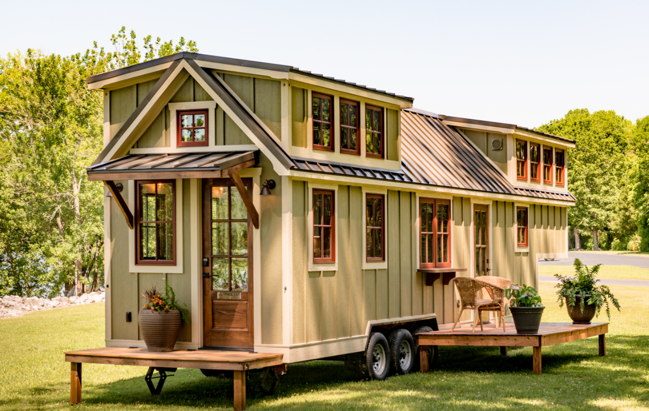
These changes reduce uncertainty and regulatory risk for investors and developers specializing in tiny homes, prefab, or RV-based housing. State-certified tiny homes may bypass some local code enforcement, and easier titling/financing options improve marketability and exit strategies for investors
"Land is the only thing in the world that amounts to anything, for it's the only thing in this world that lasts.” - Margaret Mitchell